
Square Inventory Management


PROBLEM
Most people know Square servicing mom & pop stores
It was apparent that there was a need to service larger businesses that generated more than $125K in annualized GPV (Gross Payment Volume)
These businesses required a different set of tools for their needs
SOLUTION
Launched a 0-1 product called Inventory Management which included Stock Item Management, Purchase Orders, and Vendor Management
Our team included 4 web engineers, 2 iOS engineers, 1 product manager, and I was one of 2 designers. I focused on owning and designing from scratch, an inventory management system (web app) that synced seamlessly with the iPad POS app.
Research
First, with our PM, we set out to visit local Square sellers with larger retail businesses
We interviewed them to understand their workflows and gathered all their needs and pain points
Synced up with our “Voice of the Sellers” team and identified key feedback from our sellers
Analyzed competitive landscape
We digested and synthesized findings and brainstormed and planned features with the PM and lead Engineers.
Tested prototypes with sellers to evaluate our designs and based on feedback, iterated and repeated.
Alpha tested internally and finessed designs to launch beta to select sellers. After iterating on alpha, beta feedback, finally released (GA) an MVP after 10 months.




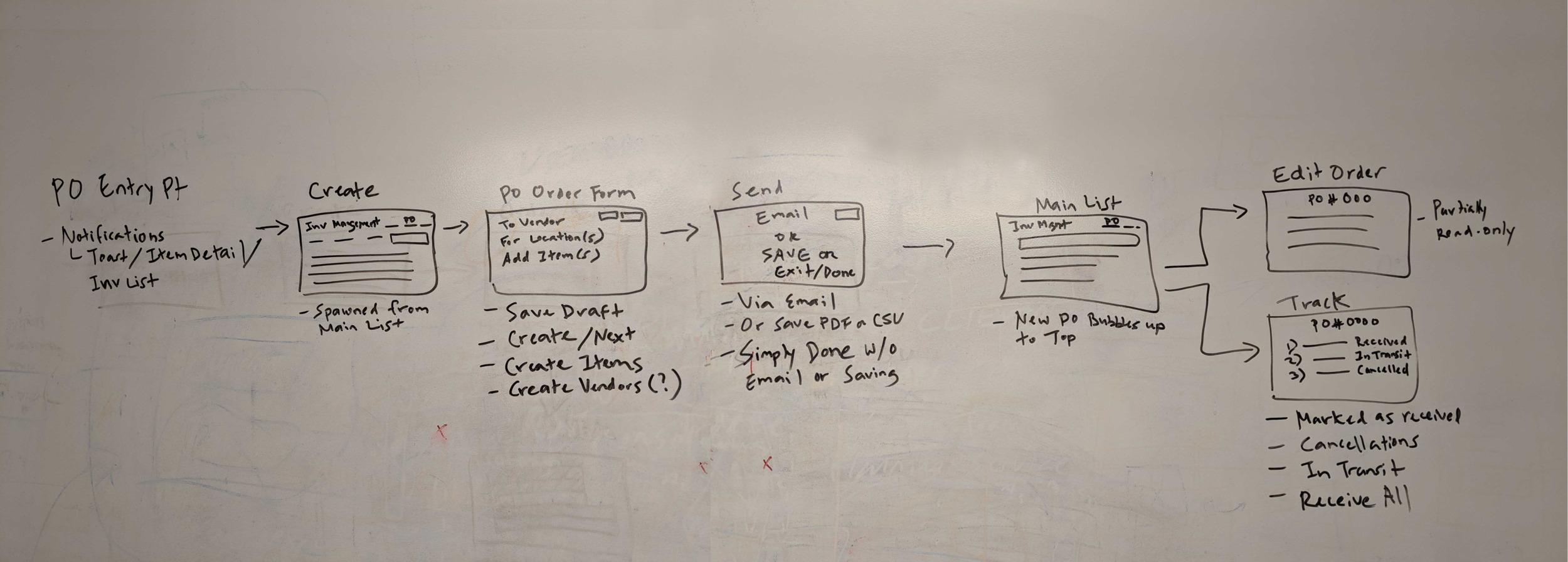
Sample sketching of purchase order flow
INVENTORY MANAGEMENT LANDING (MVP)
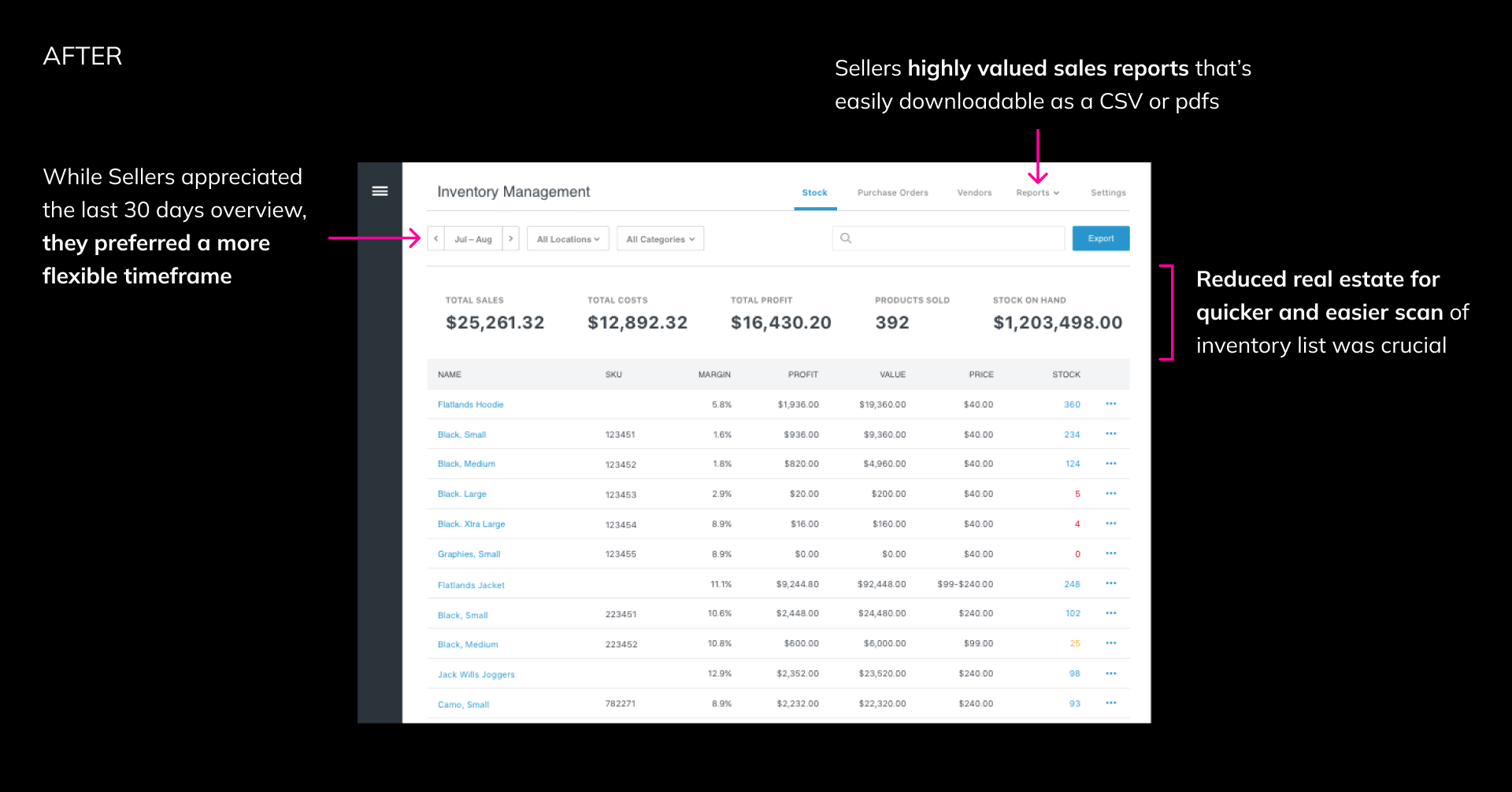
Based on all the feedback, we initially proposed the iteration below, but even though sellers appreciated the last 30 days pie chart, they preferred to have access to more reports like Cost of Goods, Inventory Performance and wanted more real estate dedicated to their inventory list.
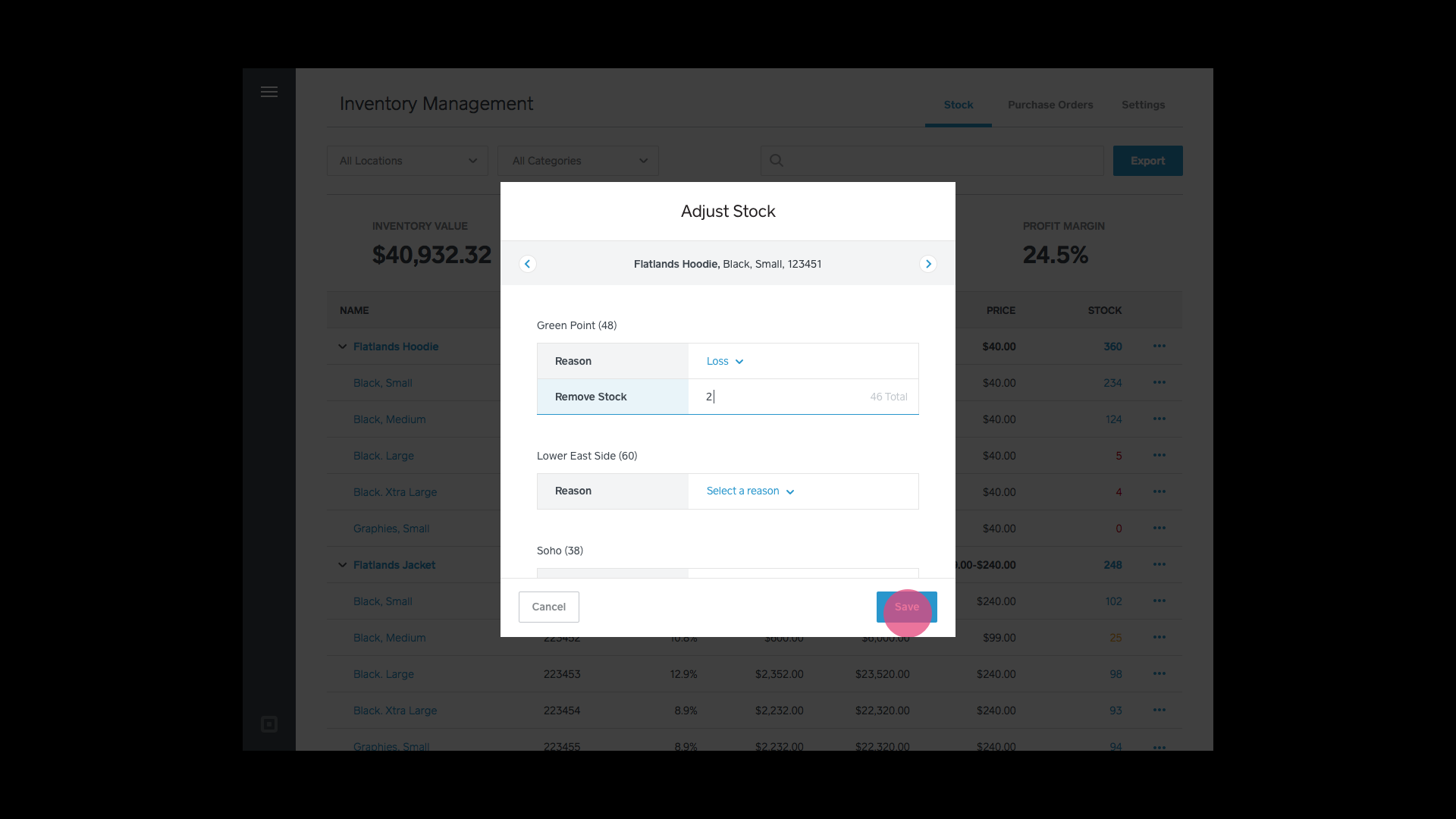
ADJUST STOCK
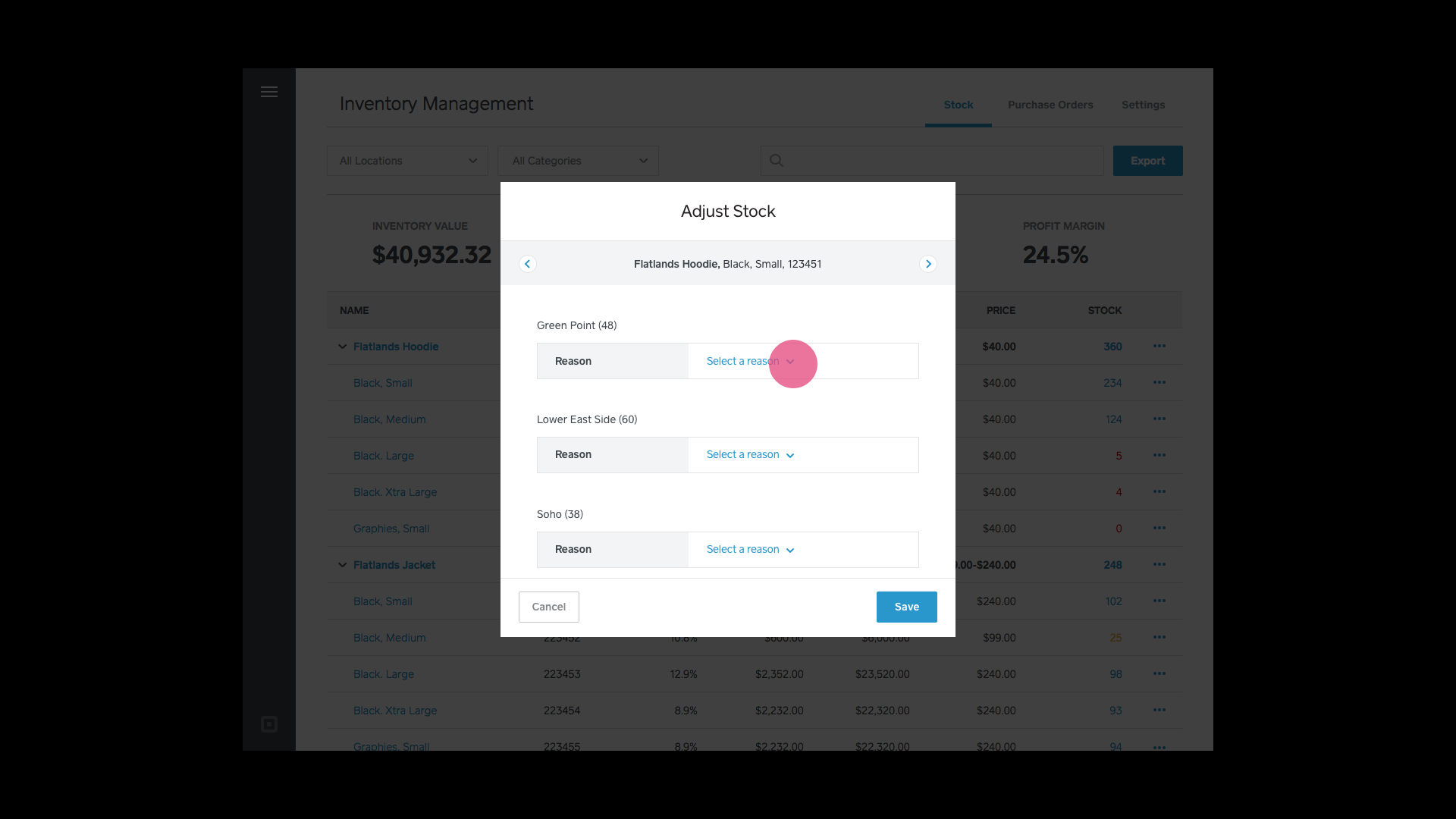
Speed and efficiency was crucial for our sellers when managing their inventory, so we came up with a cohesive and focused “adjust stock” experience that was flexible and contextual.
PURCHASE ORDERS
Many of our sellers were still calling their vendors to place purchase orders and the industry as a whole used ‘traditional’ methods to work with vendors. We came up with a digitized and simple Purchase Order system within our Inventory management platform.
Many of our sellers complained that phone calls were prone for mistakes and wanted a concise and simple order form with key input fields.
We always strived for efficiency and flexibility in our designs. For instance, a multifaceted dropdown search/selection model was designed with close collaboration with our engineers.
After interviewing sellers, it was evident that one of the biggest needs was the ability to email their purchase orders to the vendors or be able to save it as a pdf or csv.
Once the PO was submitted, sellers could easily track their orders and make updates.
VENDOR MANAGEMENT
Our sellers wanted an efficient way to organize and manage their vendors, so this feature was designed in parallel to the PO work. We designed a vendor management system that integrated seamlessly into the inventory management platform.
Sellers could create or edit vendors and easily got access to purchase orders and inventory items pertaining to a vendor.
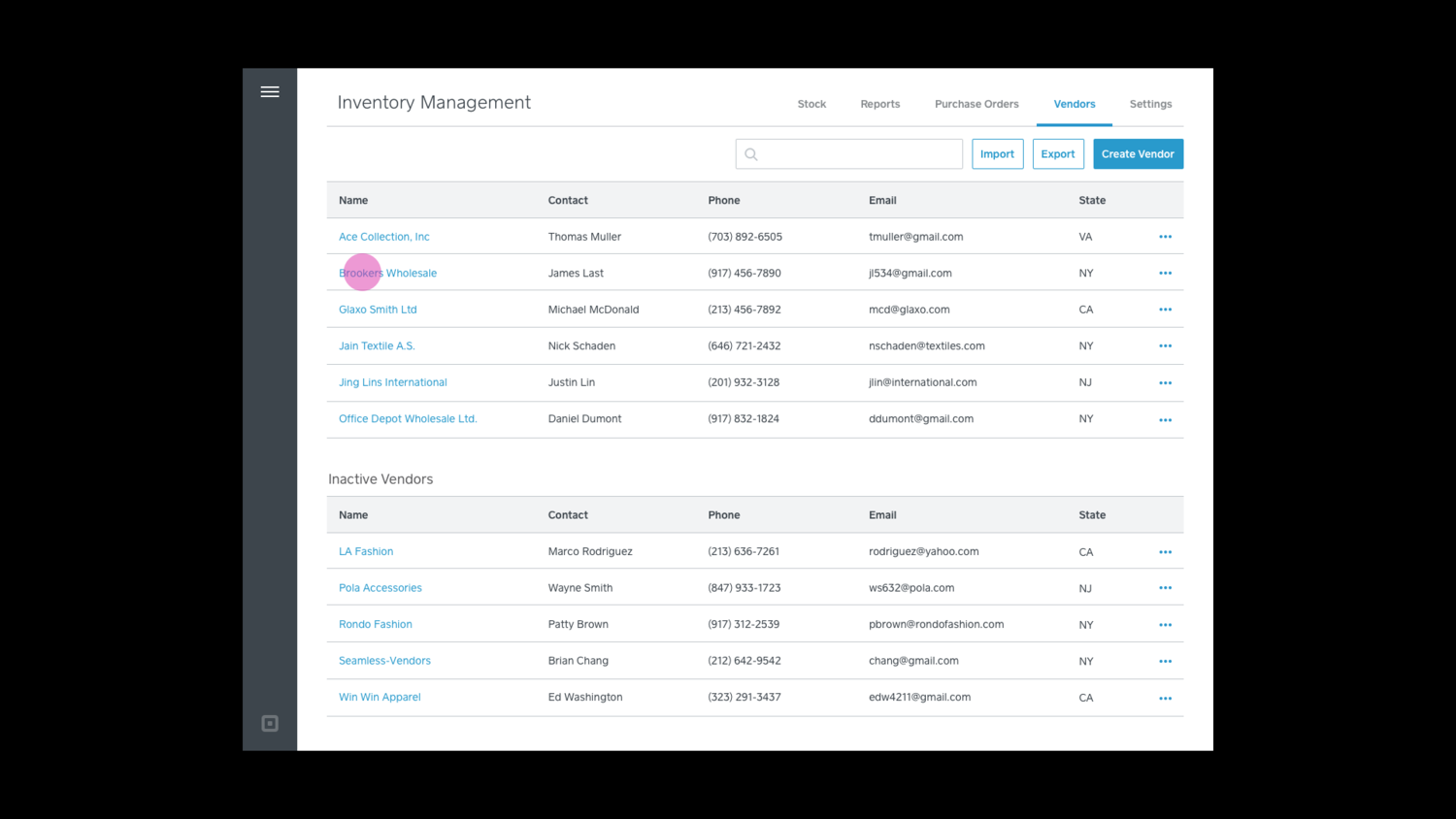
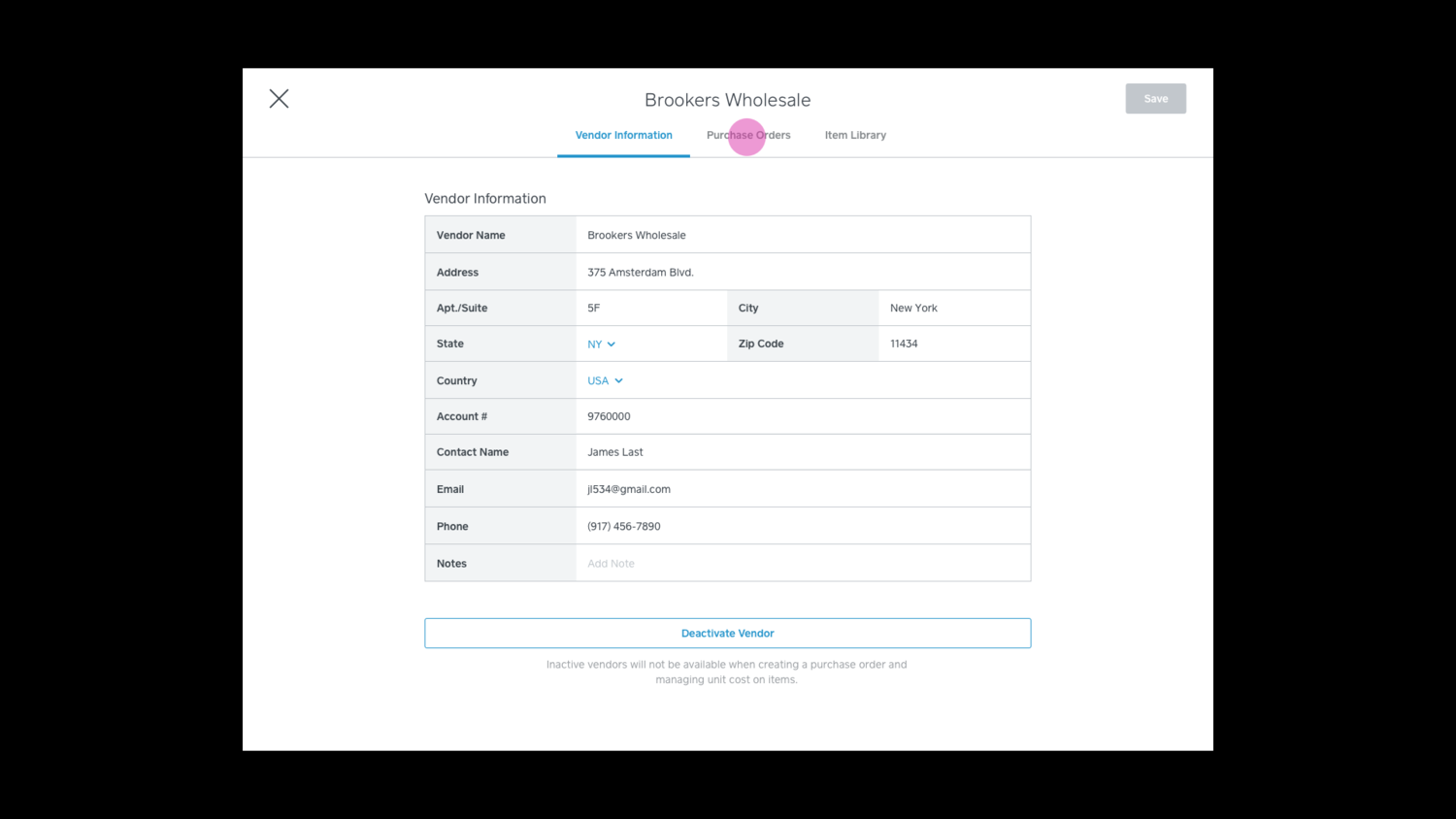
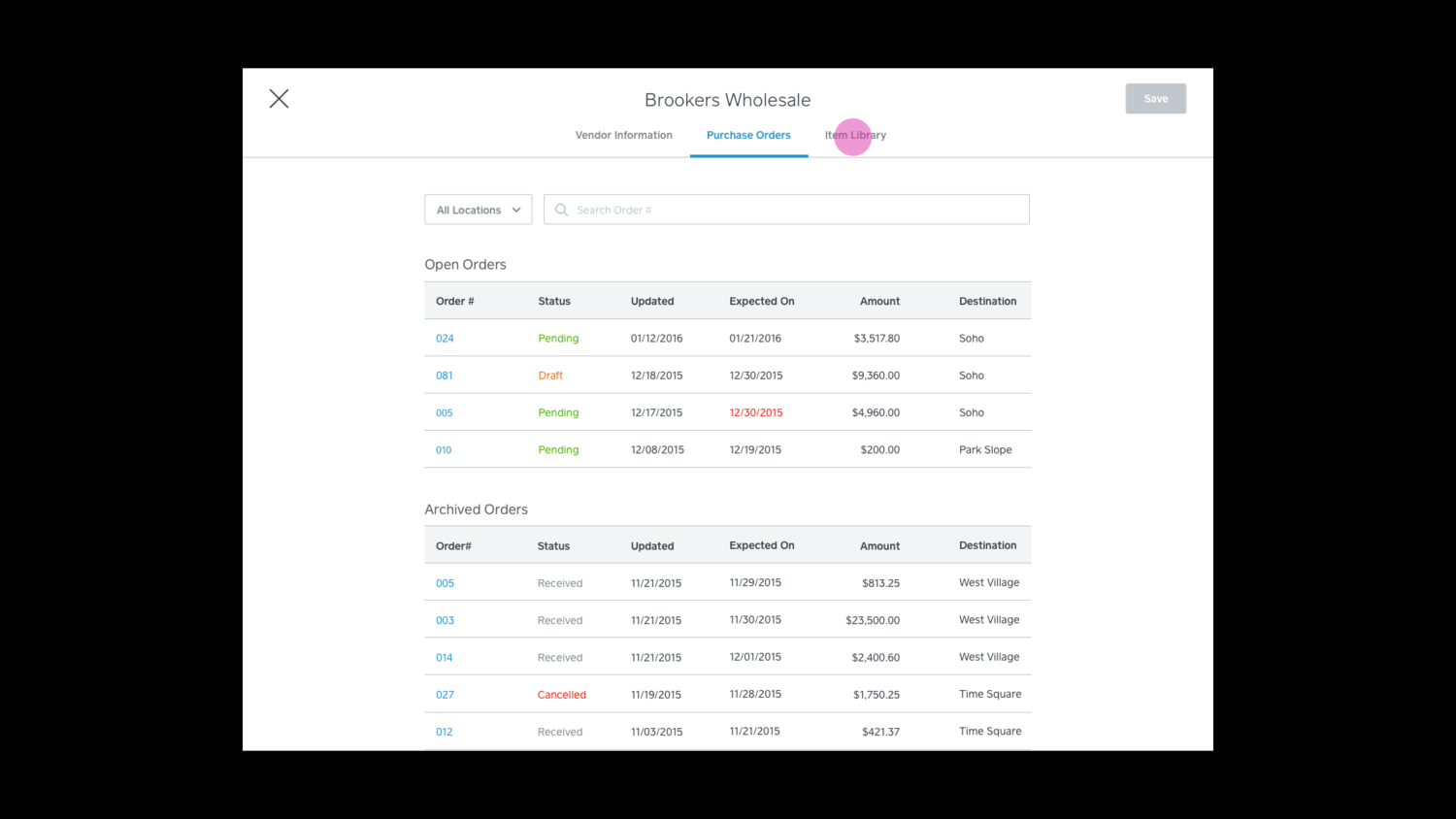
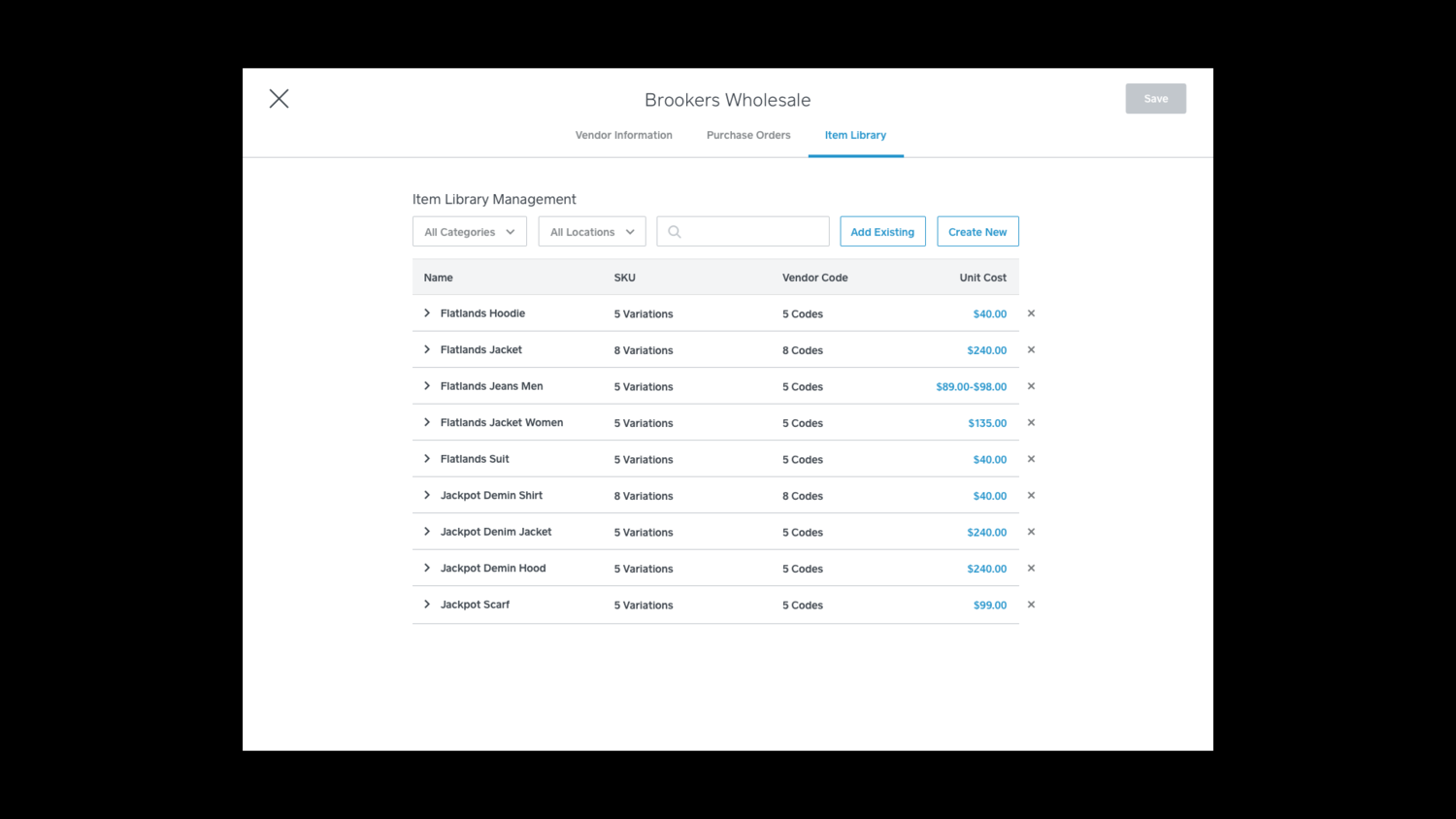
Sample feature task flows. Attention to detail was highly valued and every interaction and states were designed out for engineers to reference besides a prototype.
Results / LEARNINGS
Received positive feedback and appreciation from our sellers with larger businesses for providing tools to help them run their business. Net Promoter Score (NPS) was up.
Post launch, within a quarter, GPV (Growth Payment Volume) from mid/large market sellers was up by ≈33% and paid subscriptions were up ≈25%.
Leadership team were completely onboard to increase the budget for our team, which led to kicking off post MVP features like a robust Onboarding experience to guide our sellers better.
Metrics such as engagement, drop off rates, task success rates, and task completion times were being monitored closely. Mostly optimal except drop off's due to confusion on subscription payment plans were surfaced, so we were working closely with the monetization team to address this issue.
In retrospect, involving our sellers more frequently addressing all edge cases would have made our hypothesis’ stronger. Also relying on more short feedback loops earlier in the process would have been more efficient than utilizing fully functional prototypes later in the timeline.